Sharmila Biswas and Odissi Vision and Movement Centre
A multi-year coaching partnership with Sangeet Natak Akademi awardee Sharmila Biswas, one of India's most distinguished Odissi dancers and the founder of Odissi Vision and Movement Centre, extending into facilitated work with the 50+ young classical artists who learn and perform under her guidance.
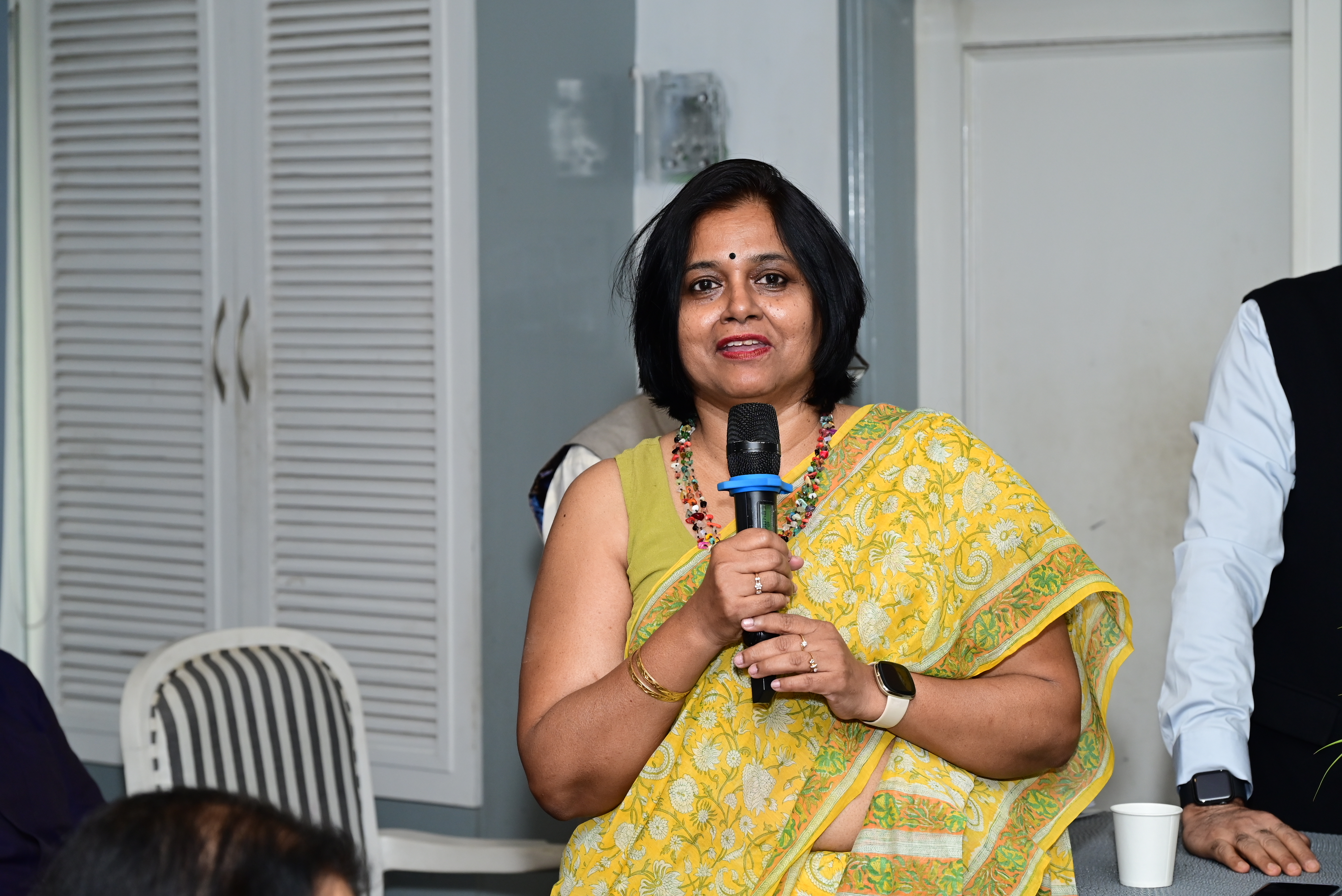
Coaching gave me a space to think about my art and my role in it with a clarity I had not found in four decades of practice.
Most coaching case studies are set inside organisations whose work coaching has long served. Corporations. Founders. Healthcare systems. Schools.
This one is set in classical Indian dance.
Sharmila Biswas has spent more than four decades in Odissi, the classical dance tradition of Odisha. She is one of the recipients of the Sangeet Natak Akademi award, India's highest honour for performing artists. She founded Odissi Vision and Movement Centre to carry the tradition forward through teaching, choreography, and the development of younger dancers.
What does coaching look like for an artist of this stature? What does coaching offer to a practice that already operates at the highest level of its field?
The answer is the same answer coaching always gives. Thinking-with-someone. Structured attention to what the practitioner is actually wrestling with. The questions only a confidential coaching relationship can hold.
The same ICF Core Competencies that serve a Fortune 500 CXO have served a classical dancer of national distinction. The mechanism does not change. What changes is the room.
The work began as 1:1 coaching for Sharmila. Most coaching frameworks were not built for an artistic practice. The questions of leadership, presence, succession, and sustainability that arrive at the top of any field arrive in different language for an artist than for a corporate leader, but they are the same questions.
What does it mean to lead a tradition?
How do you carry forward a form that has shaped you, when the world that received that form is changing?
How do you develop the next generation of practitioners without imposing on them the version of the form you inherited?
How do you sustain your own practice while you give yourself to the practice of others?
These are leadership questions. They are also creative questions. They are also questions about identity, mortality, and meaning. Coaching at this level holds all of them at once.
The work continues.
Sharmila's leadership of Odissi Vision and Movement Centre is, in practical terms, the development of younger artists. Many of the dancers and musicians who train with her come from economically modest backgrounds. Classical dance training is expensive. Sustaining a career in classical performing arts is harder still.
As the coaching relationship deepened, the work extended. Sharmi Roy began coaching and facilitating pathways for the young artists Sharmila Biswas was developing.
This work is not adjacent to coaching Sharmila. It is the same work, extended. A leader at her level is judged by the work she leaves behind. The 50+ artists building careers under her guidance are part of how that legacy gets built.
Coaching them is coaching her mission.
Young Artists
Centre Artists
The coaching is not a project with a defined end. It is a sustained relationship between two senior practitioners in different fields, with overlapping commitments to development, presence, and the carrying forward of human capacity.
Sharmila is featured on the Art To Lead YouTube channel in Season 2 of the coaching-awareness video podcast, in sustained conversation with Sharmi about coaching, leadership, and the artistic life. The conversations are not promotional. They are two practitioners thinking together in public.
The same competencies that serve a corporate executive serve a classical artist. The same presence. The same depth of listening. The same structured attention. The room changes. The work does not.
Coaching Sharmila Biswas became coaching the artists Sharmila Biswas develops. The work compounds when the coach can hold both the leader and the leader's wider commitments.
Classical Indian performing arts are not a sector that has historically had access to professional coaching. This case is part of how that changes. The same standard belongs in every room. Including the dance studio.
The 50+ young dancers and musicians who have benefited from facilitated pathways through this engagement are part of the test of whether the conviction is real. They are.
Coaching for an artist of this stature does not change the work. It only changes who is in the room. The same ICF Core Competencies, the same presence, the same care. The conviction is that the coaching belongs there too.
Whether you lead a corporation, a hospital, or a classical dance tradition — the questions of leadership, presence, and legacy are the same. Let's explore what coaching can offer your practice.